A Phantom Exhibition by Dainius Liškevičius: the Apocalypse Begins Every Day, Not Tomorrow
Apokalipsė prasideda kasdien, ne rytoj
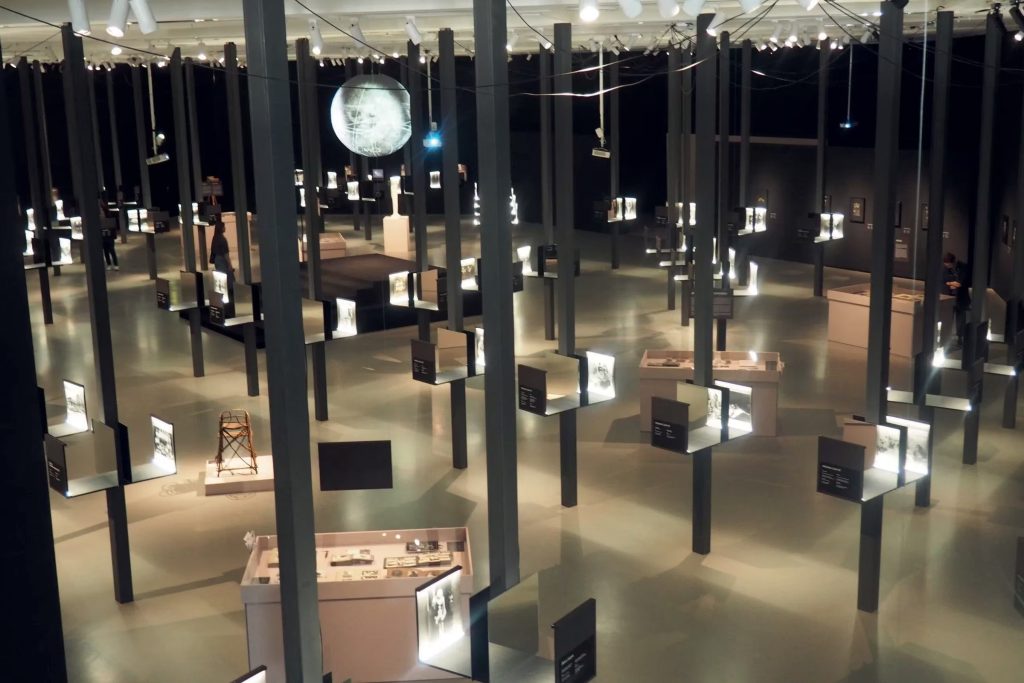
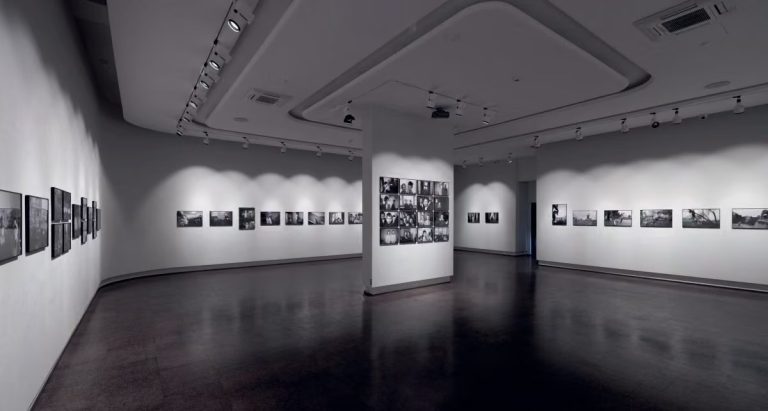
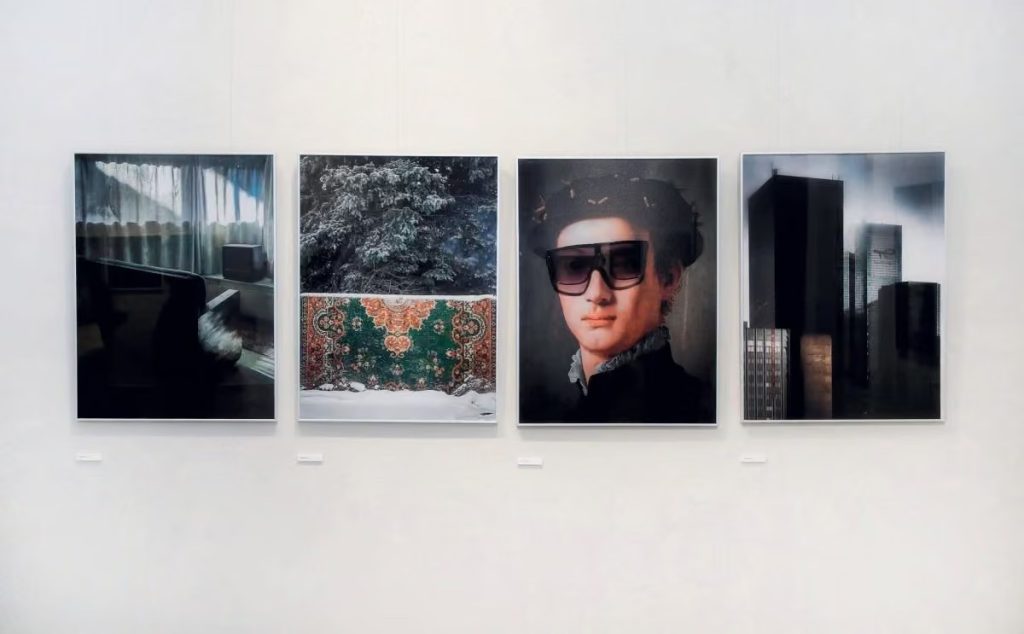
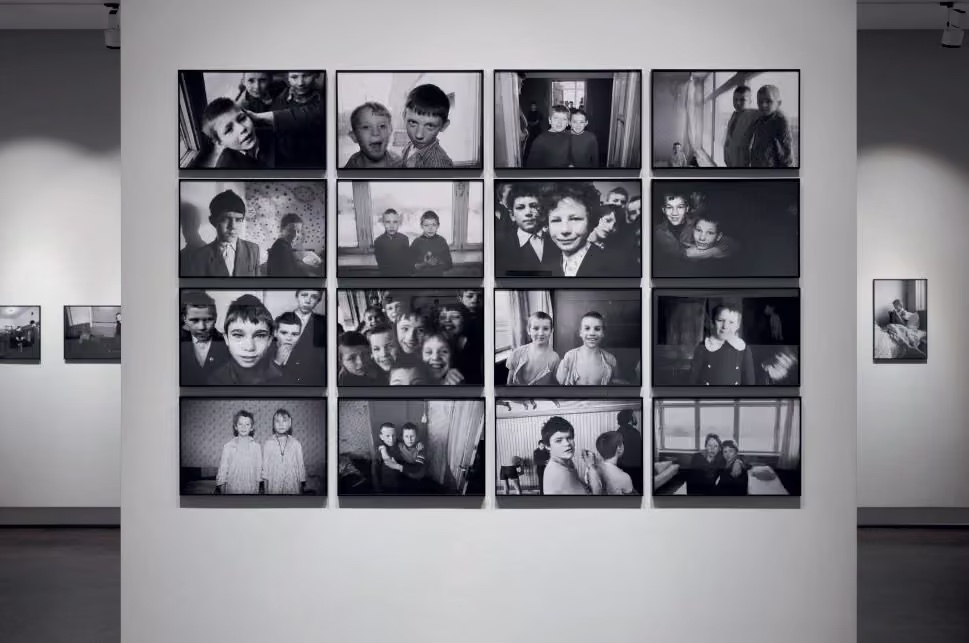
Prospektas Gallery in Vilnius hosted the Dainius Liškevičius exhibition Murmuration or the Small Events. The artist explains that he conceived the exhibition as a kind of scenography in which the viewer becomes part of the exhibition itself. The installation-based elements, both overt and subtle, generate a post-apocalyptic atmosphere.
Extending the artist’s own thoughts, I would add that the exhibition’s essential work could be said to assemble itself in viewer’s imagination, while the exhibited objects function as impulses, signposts, hints. What, then, is this central work? It might be a detective story, as Liškevičius leaves behind various clues and creates the impression that something has already happened.
Already the gallery’s display windows themselves are coated with ash and sand. The artist recounts that there had been plans to install a cinematic stereotype, a cliché, in the street – a burning barrel. Although this work was never realised, it exists mentally, by implication, much like the exhibition-as-work itself. Ash clinging to the display window from this imagined flame raises questions: was this the result of vandalism, of war, or of some science-fiction scenario? The nearby Parliament building and the memory of the 1991 January 13 events add yet another contextual layer.
Inside, this motif seems to continue in the form of a pyroclastic flow from an erupting volcano, clouds suspended in space. This is both a fragment of catastrophe and a meditative act of cloud-watching, where fantasy-generated silhouettes are discerned. Ash here is at once cremated human remains and a religious image of the beginning and end of human life; it also evokes Werner Herzog’s film The Fire Within: A Requiem for Katia and Maurice Krafft, about a couple who devoted their lives to the study of volcanoes. In a nineteenth-century apocalyptic engraving, the silhouettes of two people flee. They run towards a hut, towards shelter. Yet the narrative, like the entire exhibition, remains open to interpretation.
‘They are travelling and perhaps want to kill one another, or perhaps to rest, to hunt, to fish, or to look for gold, or to die, or simply because they have nowhere else to go,’ Liškevičius provocatively suggests. The need to hide, according to the artist, arose during the pandemic, when most of the works in the exhibition were created and later reinterpreted. The sense of impending war and geopolitical proximity gives rise to similar escapist impulses. Nearby are overturned chairs, mud or excrement seeping down a wall. This imagery is echoed by owl droppings.
The owl as a character has appeared in Liškevičius’ work before. Previously, the message left by the owl resembled a map; this time, the message remains undeciphered.
In another room is what is arguably the main work of the entire exhibition – an edited film. Its central role is played by old archival footage from the artist, showing him with his family in St. Peter’s Square at the Vatican, next to St. Peter’s Basilica. The square is chaotic, the artist’s children are running wild, and the footage dates back more than a decade, to the time when Pope Francis was appointed head of the Roman Catholic Church. (It feels symbolic that on the very morning I am writing this text, we have lost him.)
According to Liškevičius, the film’s imagery alludes to Giorgio de Chirico’s painting Rising Sun on the Plaza. Viewers are invited to sit down, as if they themselves were figures within the filmed square; beside them stands another overturned chair. On the sides are photographs taken long ago, one in colour, the other monochrome. Liškevičius reflects on which image is more truthful, and how each is encoded in memory.
Behind the cinema screen are bones of eaten poultry, arranged repeatedly into the letter A, and Liškevičius hints that this is the exhibition’s answer. It is also a scream on waking from a nightmare – AAAA! Yet one passes through to the other side, from everyday life to being, into dream, into the subconscious. The journey works in both directions. Transcendence either occurs or it does not. I believe it did. Liškevičius’ hints took effect.
In the film we also see a crawling performance by the artist’s son, hidden inside a sleeping bag. The wings of a dead pigeon flash into view, a tree trunk echoing the sign of alpha, images from various cities – Athens, Venice, Vienna, London – and a vision of burning Vilnius seen through a window.
The term ‘murmuration’ describes the chaotic movement of starlings in the sky. Liškevičius reflects on human movement and its transformations. Such thoughts arose during the pandemic, when city centres were emptied, while nature refuges adapted for tourism were overcrowded with people fleeing prolonged confinement at home. But this is only one emphasis. The ‘small events’, according to Liškevičius, are minor occurrences captured in images – an owl’s sign, travellers in an engraving, letters formed from the remnants of a dinner table.
‘When people talk about the apocalypse, it will not begin tomorrow; it is happening gradually, and those signs are the small events,’ Liškevičius warns pointedly.
As the artist emphasises, there are no concrete riddles in this exhibition. It consists of moods, premonitions, motifs that more sensitive viewers will notice. This is why, during the opening, he attempted to limit visitor flow and avoid a festive atmosphere. Indeed, in this exhibition, viewers are advised not to rush and not to look for ready-made answers. The artist himself encourages free interpretation, and perhaps the letter A may function as a gateway to another reality.
In this text I have presented the contexts, impulses and creative processes as recounted by the artist. From my own perspective, I would add that this is a phantom exhibition. The physical works are there, they exist, but what is equally important is what is felt and what is absent. The exhibition resembles the Phantom figure itself; although we do not see the aggressor, the vandal, the source of the threat, it lingers in the air, between the lines, between the elements of scenography – in other words, within Liškevičius’ works. As I was trying to enter the exhibition during the opening, the artist himself warned me: ‘But there is almost nothing there.’ To see more, one must look again and again, sensitively reading signs and atmospheric nuances. Then the exhibition fills with the shadowy, dystopian tones of events that have not yet occurred.
The adjacent environmental context also struck me as important. Before our conversation, the artist shared a photograph on social media showing a brutally felled forest near his homestead. And now it is bird nesting season. Perhaps the owl’s nest was there too – the same owl that repeatedly painted with digested food on canvases laid out by Liškevičius himself. Will it continue to paint? And those little bird bones… They provoke thoughts about human consumerism and about the fact that the apocalypse is already creeping, padding, prowling. One only needs to listen and to look more closely.
Liškevičius’ exhibition is cinematic and multi-directional. Something has already happened; we find ourselves in abandoned spaces after cataclysms, yet at the same time everything that is frightening still lies ahead. An idyllic engraving, meditative drawings, all charged with tension – something is about to happen again.
Articulated narratives and meanings slip slightly to the side, because the essence of Liškevičius’ work is ephemeral, elusive, subtle.
Until May 3 2025, Prospekto Gallery (Gedimino Ave. 43, Vilnius)